The MOLA Academy of Archaeological Specialist Training (MAAST) is a specialist-led initiative designed to share expertise and empower more people to contribute to archaeological knowledge. Now in its third iteration, the academy recently collaborated with the Bartmann Goes Global project to create a 12-week course held between October and December 2025 with the participants drawn from a diverse range of backgrounds and experiences.
In this blog, two participants reflect on the course: a deep dive into the world of 17th-century Rhenish stoneware, that blended specialist lectures with hands-on workshops. We explored the fascinating meanings and inspirations behind the iconic medallions found on these jugs. This was an exciting opportunity to explore and record some of MOLA’s extensive collection of Bartmann jugs for the public sphere. By cataloging and handling vessels excavated right here in London, we helped to build an understanding of the jugs' journeys across vast international trade routes. A key output was that every vessel we processed was added to the Bartmann Goes Global database, a bespoke resource created specifically to map the global reach of these unique historical objects and is being added to weekly.
Amy
After seeing the latest MAAST course advertised on LinkedIn I was eager to apply and gain new knowledge through experience in recording, handling, and guided sessions. I was so excited to take part in this course and help this institution. As a recent Archaeology graduate from the University of Manchester, I have been eager to bridge the gap between my theoretical knowledge and expand my understanding of professional practices within a practical setting. Through this course, I can say that I have been able to achieve this.
A key fascination with objects related to food and drinking consumption really drew me to this course. I am really interested in the relationships that people had with food and the material surrounding it. The Bartmann jug, being an iconic vessel for sharing and holding alcohol, emphasised the communal nature of these vessels. I was able to understand their use in different drinking spaces in addition to the many other functions Bartmann vessels had. And now I am truly obsessed with them.
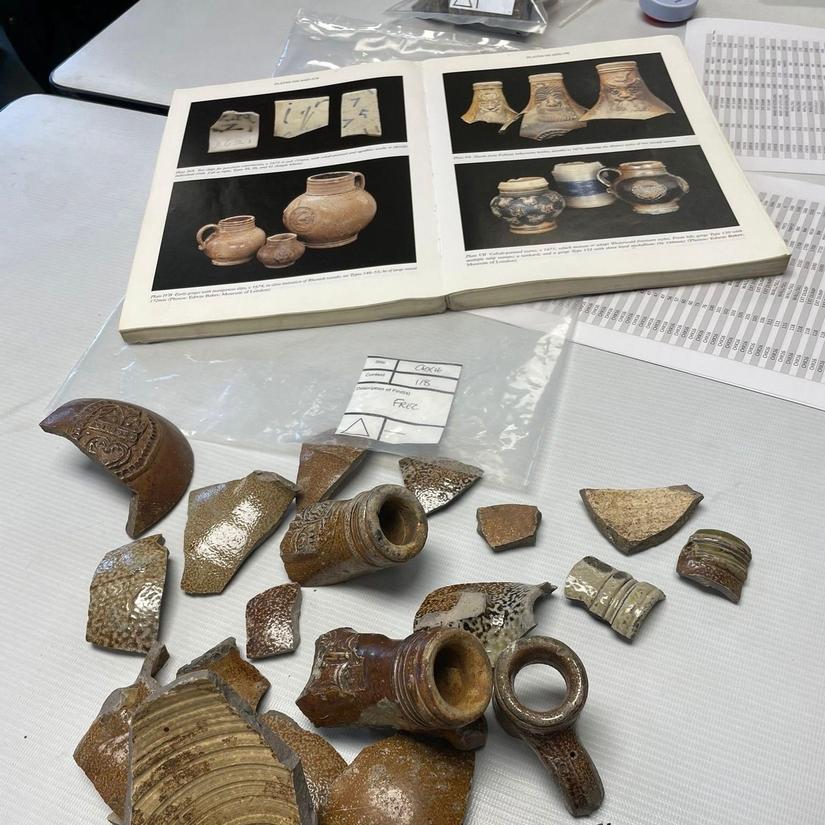
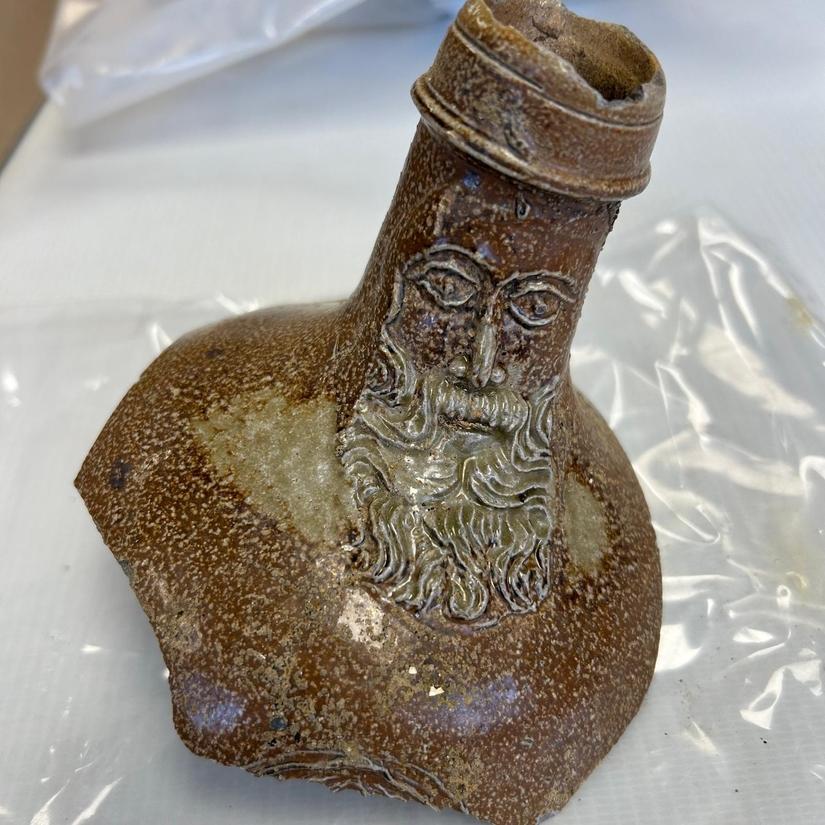
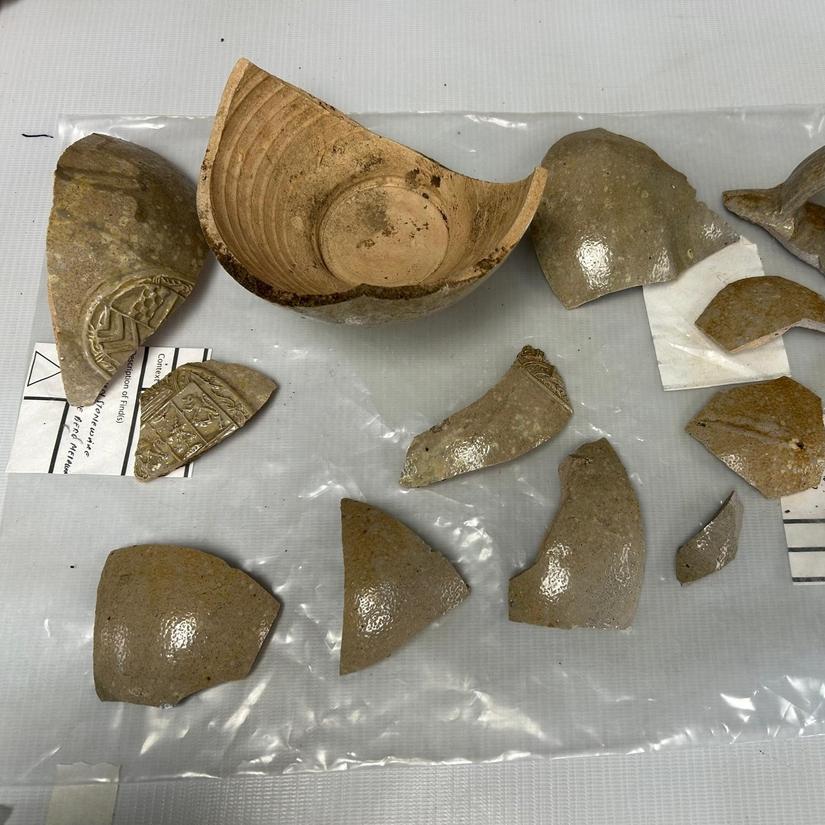
I particularly enjoyed the hands-on experience of identifying the iconic medallions and face masks of Bartmann. Being able to see them up close and hold them really cemented my fascination and adoration for the jugs. A highlight for me was the first site we looked at from an alehouse cellar on Fenchurch Street that had likely been sealed by the Great Fire of London held a variety of vessels, these being the first we pieced together, resonated with me. I loved learning about the impact of the vessels on the British ceramic market, particularly that they became an influence for jug shapes and styles, eventually leading to the first stoneware firing kilns in Britain. Beyond the archaeology, the opportunity to collaborate with such a diverse group of people has been incredibly rewarding.
Joan
As an undergraduate in Ancient History and Archaeology at Birkbeck, this course has been a monumental stepping stone in getting hands-on experience and training in the heritage sector.
Learning about the history, trade, and making of the Bartmann jugs was far more fascinating than I’d imagined it would be; all thanks to the incredible learning environment the course provided. The diverse mix of careers and lifestyles among the other participants, combined with the warm welcome provided by the course leaders, allowed me to learn and gain confidence in identifying and documenting the excavated jugs and sherds comfortably. One of the best parts about our time documenting the finds was the sensory experience of opening a new box from the site and getting a true sense of the history of the jug and sherds. Being able to hold the cold stoneware and feel a chalky, sometimes soot-like texture allowed me to truly appreciate these historic pieces.
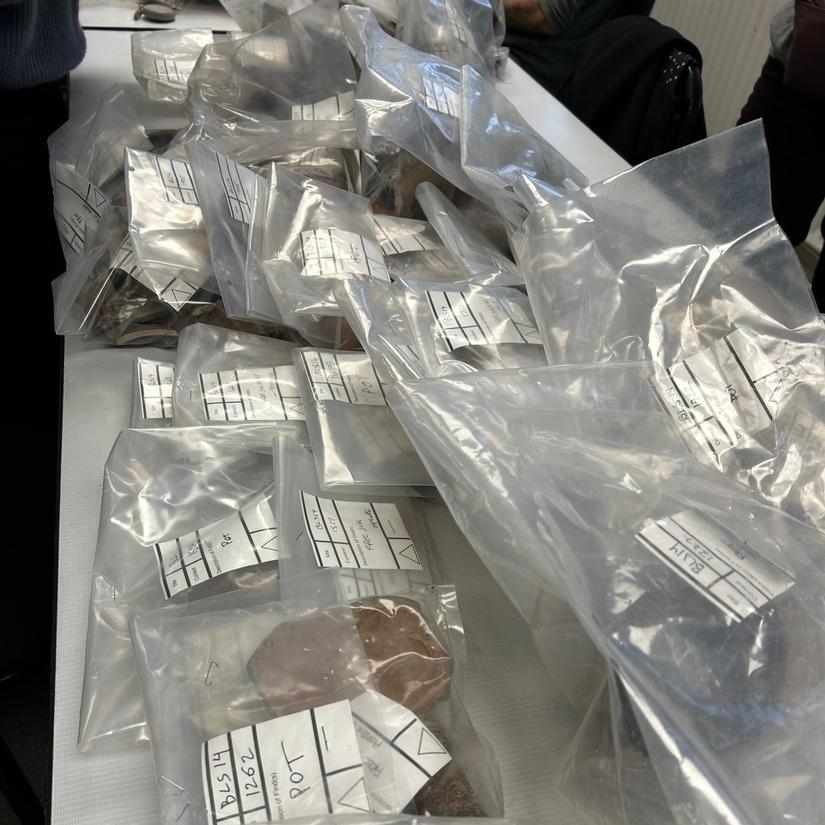
For the most part, the weekly two-hour sessions were split in half: the first often being in a classroom-like environment, where we learned about the history of the stoneware we were working with, whether by one of the course leaders, or at times by other noteworthy people working alongside us on the ‘Bartmann Goes Global’ project. The second, if not a continuation of the lecture, was dedicated to documenting the finds of whatever site we were working on that week. Here, we worked together to identify, piece together, and record our material. Most importantly, this archival process allowed some of us to have our first taste of working with archaeological finds in this fashion, and for most to build upon already honed skills. One of the highlights was the hands-on handling sessions with Bartmann jugs and Essex black-glazed ware handled mugs or tygs excavated from London sites, which really helped paint a picture of how these vessels were used together.
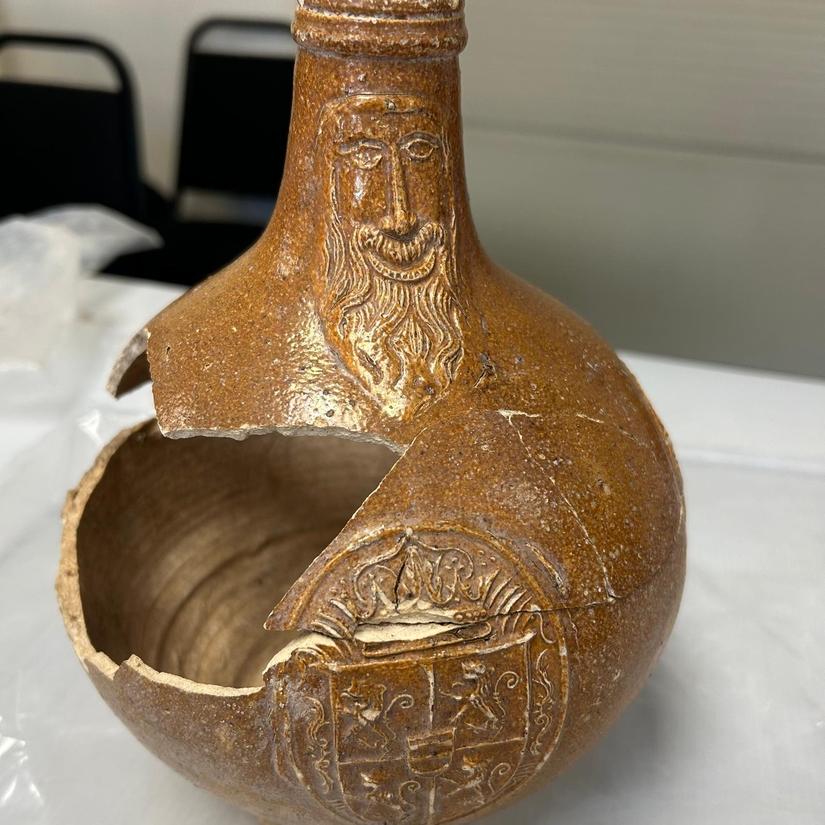
It was very rewarding to see our uploads on the website over the 12 weeks, and having documented all the stoneware brought out for us before we’d reached the end of the course was just as exciting a feeling. We look forward to hopefully staying in contact with the other participants of the course and continuing to help with the ‘Bartmann Goes Global’ project.
We hope to get more people involved in the project through the ‘submit a jug’ portal found on the Bartmann website.
By Amy Button and Joan Dunne.