About this jug
Location:
Waddenzee, Vlieland,
Netherlands
Long/Lat:
53.26, 5.18
Notes: Since 1985, the Dutch diving team Caranan has been conducting research on a wreck they found themselves in the Frisian Wadden Sea. The total length from the bow to the broken parts of the stern was 19 metres. The maximum width was more than six metres in several places. The visible planking on both sides of the bow was complete. The stern is missing.
The largest group of finds consists of ceramic material, ranging from bricks to decorative porcelain, including a large quantity of clay pipes that were part of the cargo. The cargo consisted mainly of stones and roof tiles. The remaining finds can largely be considered part of the inventory and consist of glass bottles, various metal objects including spoons, needles, tobacco boxes, buttons, buckles, coffee pots and a candlestick, a few objects made of stone and wood (which did not belong to the rigging), including the butt of a musket, bone objects, leather and plant material. The ten brass tobacco boxes are a spectacular find. Examination of the cargo and ballast revealed that the ship was sailing out to sea. Because the year 1756 is noted on a number of pieces of Lower Rhine pottery, it is assumed that the ship ran aground in 1756 or shortly thereafter. Archival research identified the ship with a high degree of certainty as the single-masted galleass “de Stad Bergen” owned by Cornelis Wopkes Vos, which had left Amsterdam “in ballast” bound for Bergen in Norway and ran aground on 29 March 1756 near the island of Griend “near the eastern shore in 't Vlie”.
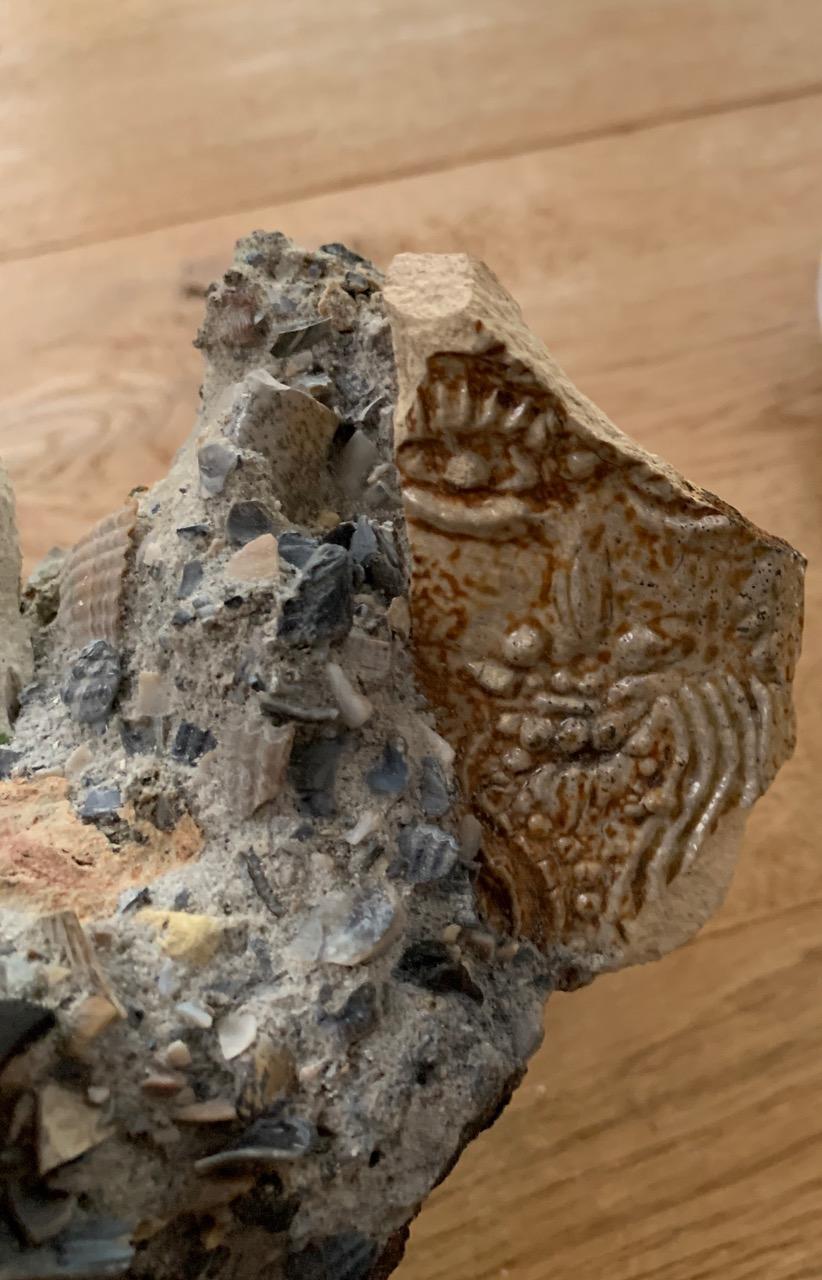
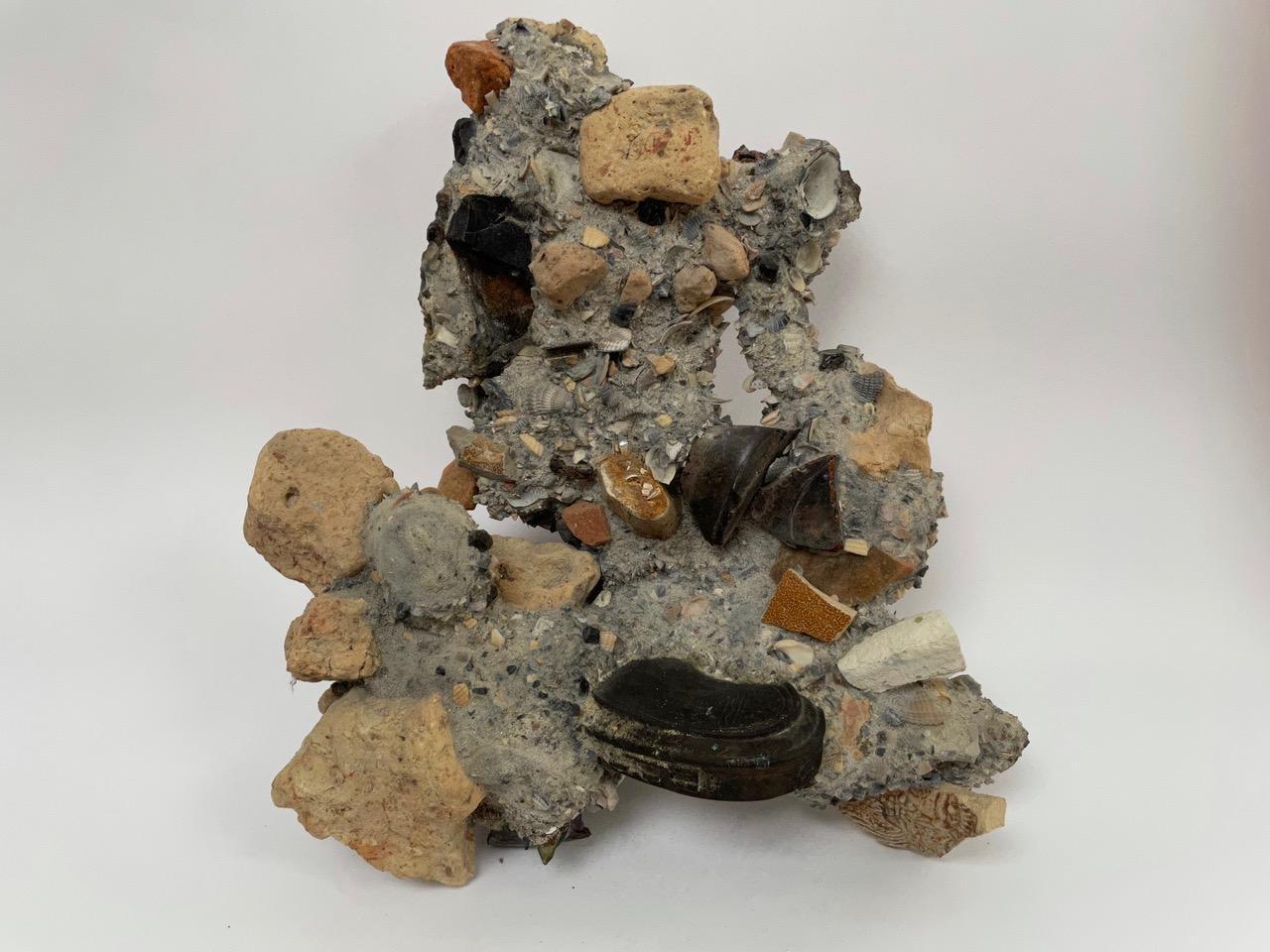
Feature description: A concretion of a tobacco box with pottery, glass and stoneware, including a shard from a bartmann jug. The length of the concretion is 330 mm.
Identifier: De Stad Bergen-01
Custody: Private collection
Custody Data: Duikclub Caravan