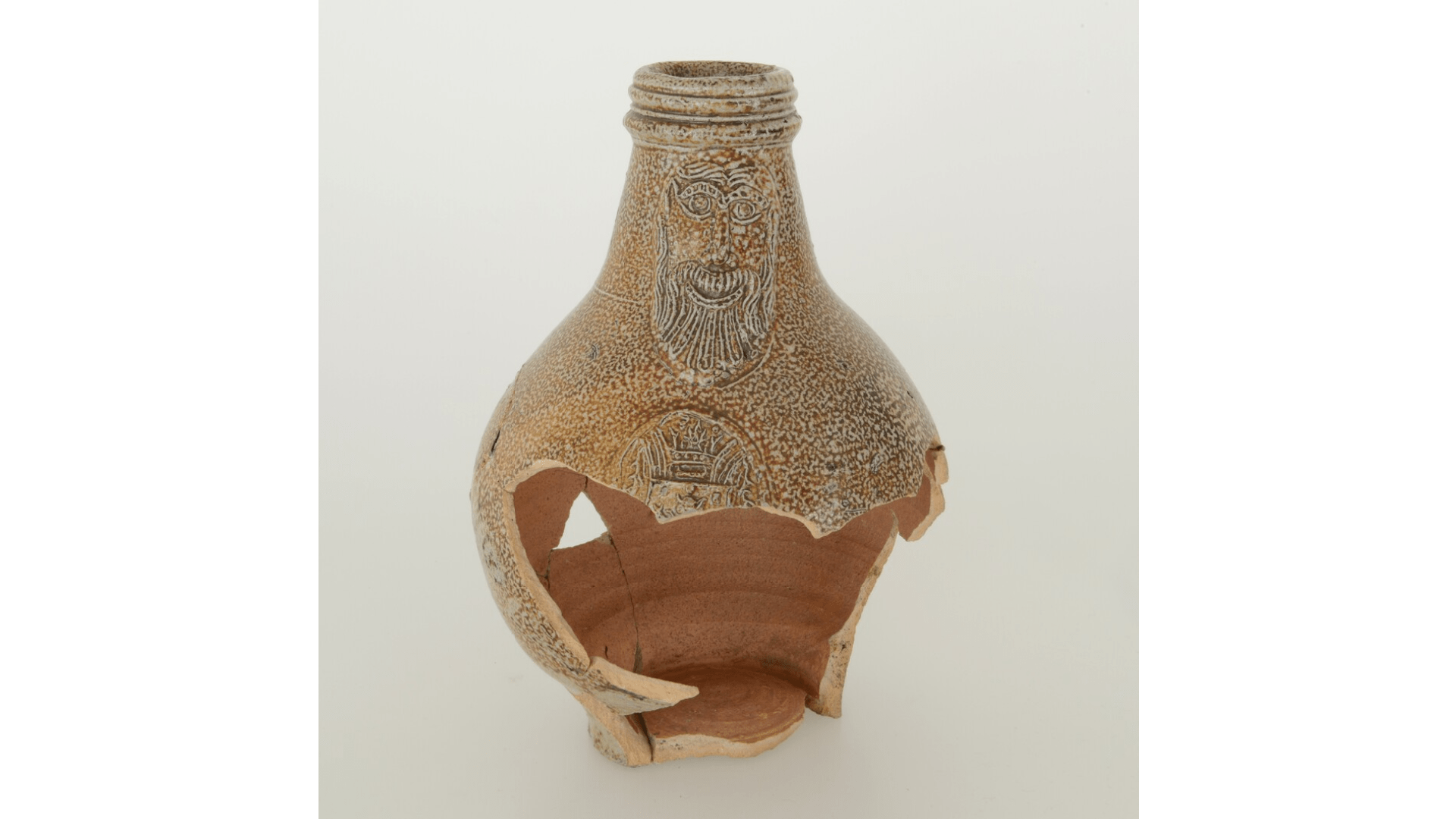
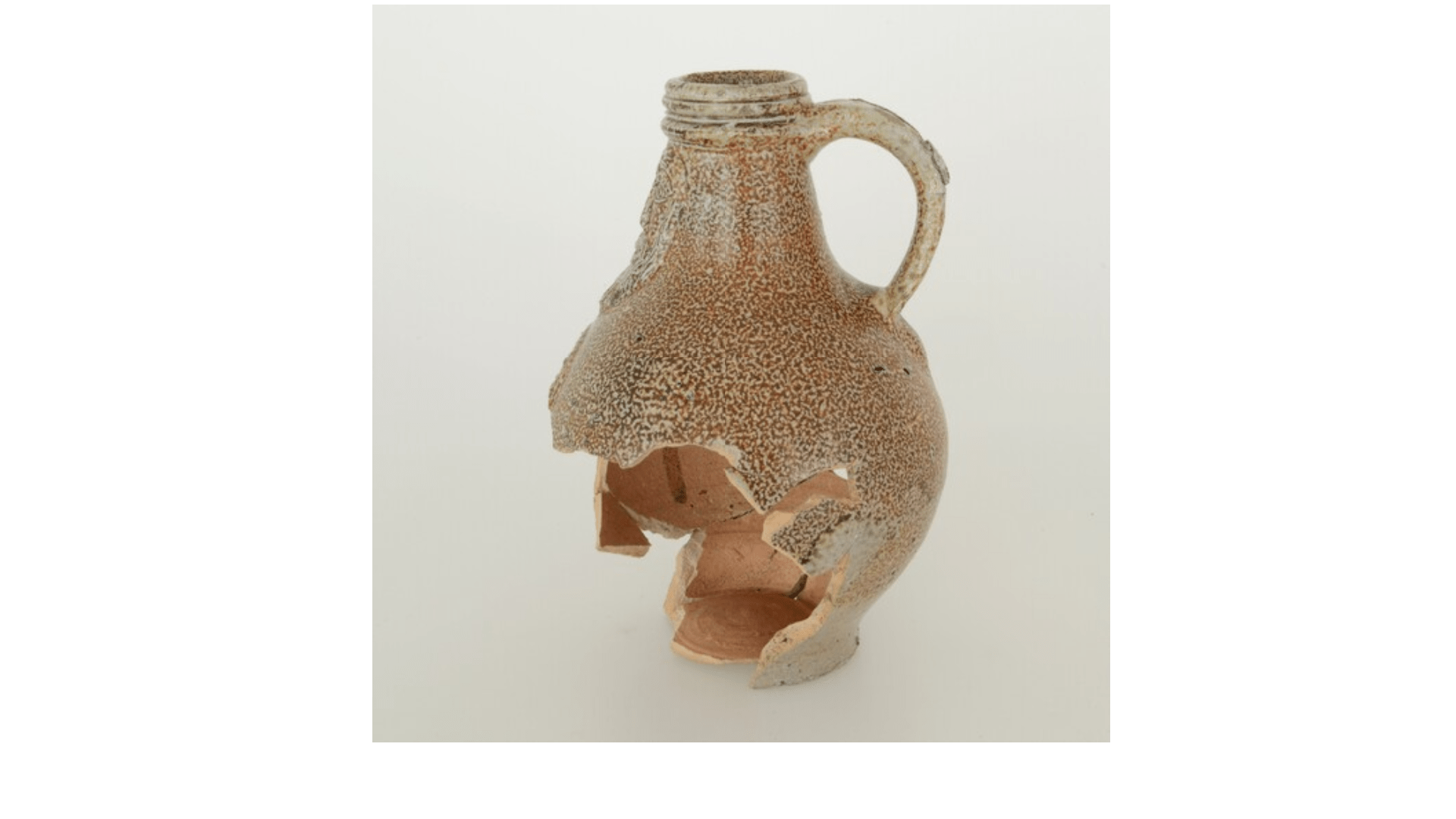
About this jug
Location:
Raamstraat, Albert Heijn, Enkhuizen
Netherlands
Long/Lat:
52.70544, 5.29145
Notes: In 2014, archaeological research was conducted by Archeologie West-Friesland. In 1590, the major urban expansion of Enkhuizen began, and the investigated area became part of the city. In that year, old ditches were filled in, and the ground level was raised. Subsequently, several new ditches were dug, two of which were found during the excavation. These new ditches did not exist for long, as they were filled in again around 1615. During the filling process, a lot of waste was thrown into the ditches. Some notable finds from this waste include early Chinese porcelain, Italian and Portuguese faience, a coconut and a miniature mortar made of lead and tin. A large pit yielded a remarkable olive oil jug from Portugal. Houses were built in this part of the city in the first half of the 17th century.
Height: 180.00
Max-width: 120.00
Foot diameter: 70.00
Feature description: Bartmann jug; s2-kan-32; convex jug with shoulder transitioning into a high neck with ribbed collar edge; stoneware with surface treatment; salt glaze; appliqués: mask and coat of arms; flat base; one ribbon handle; origin: Germany, Frechen.
Identifier: Collectie Archeologiemuseum Huis van Hilde PNH 10437-02 https://hdl.handle.net/21.12153/obj57837
Custody: Museum
Custody Data: Archeologiemuseum Huis van Hilde