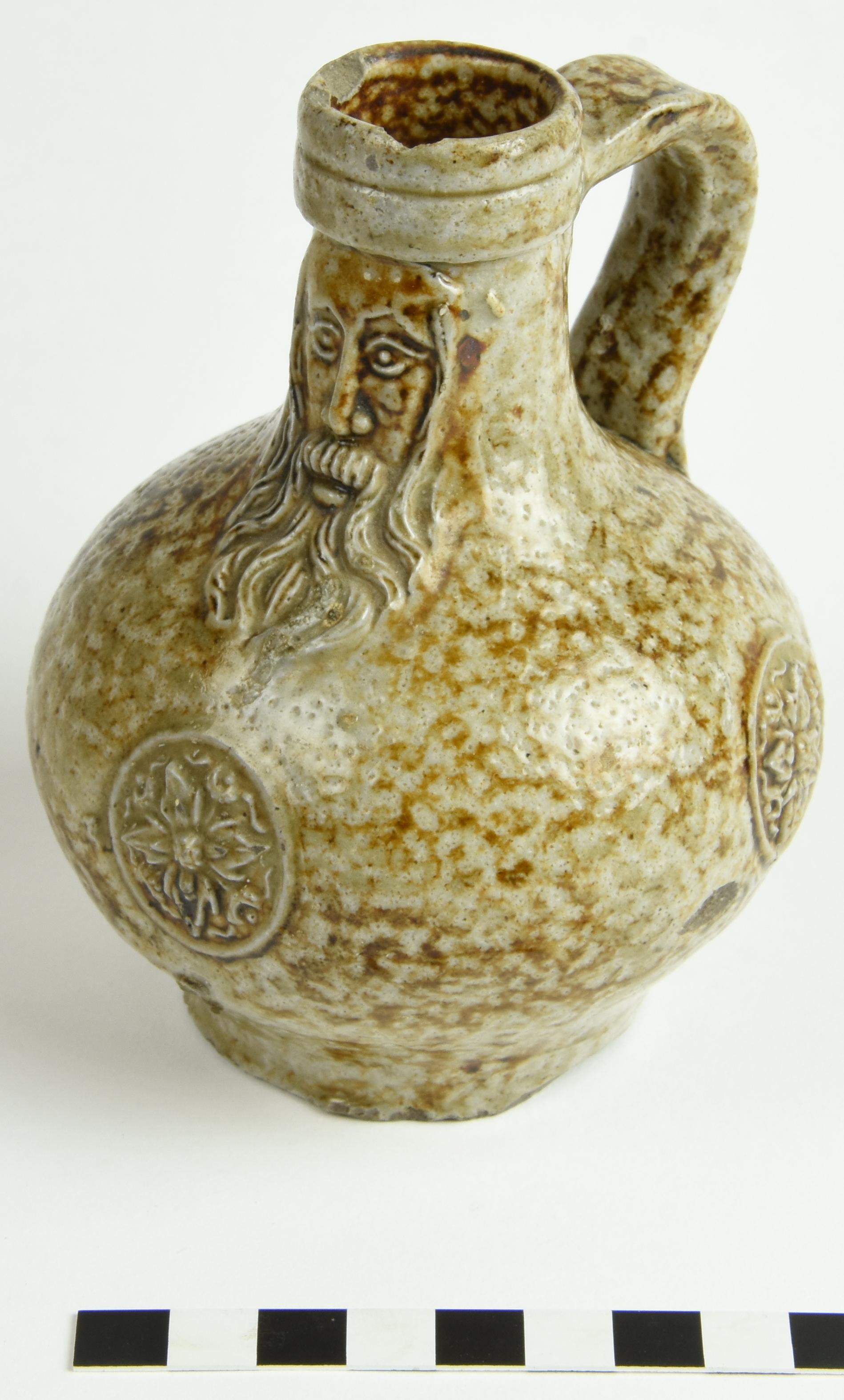
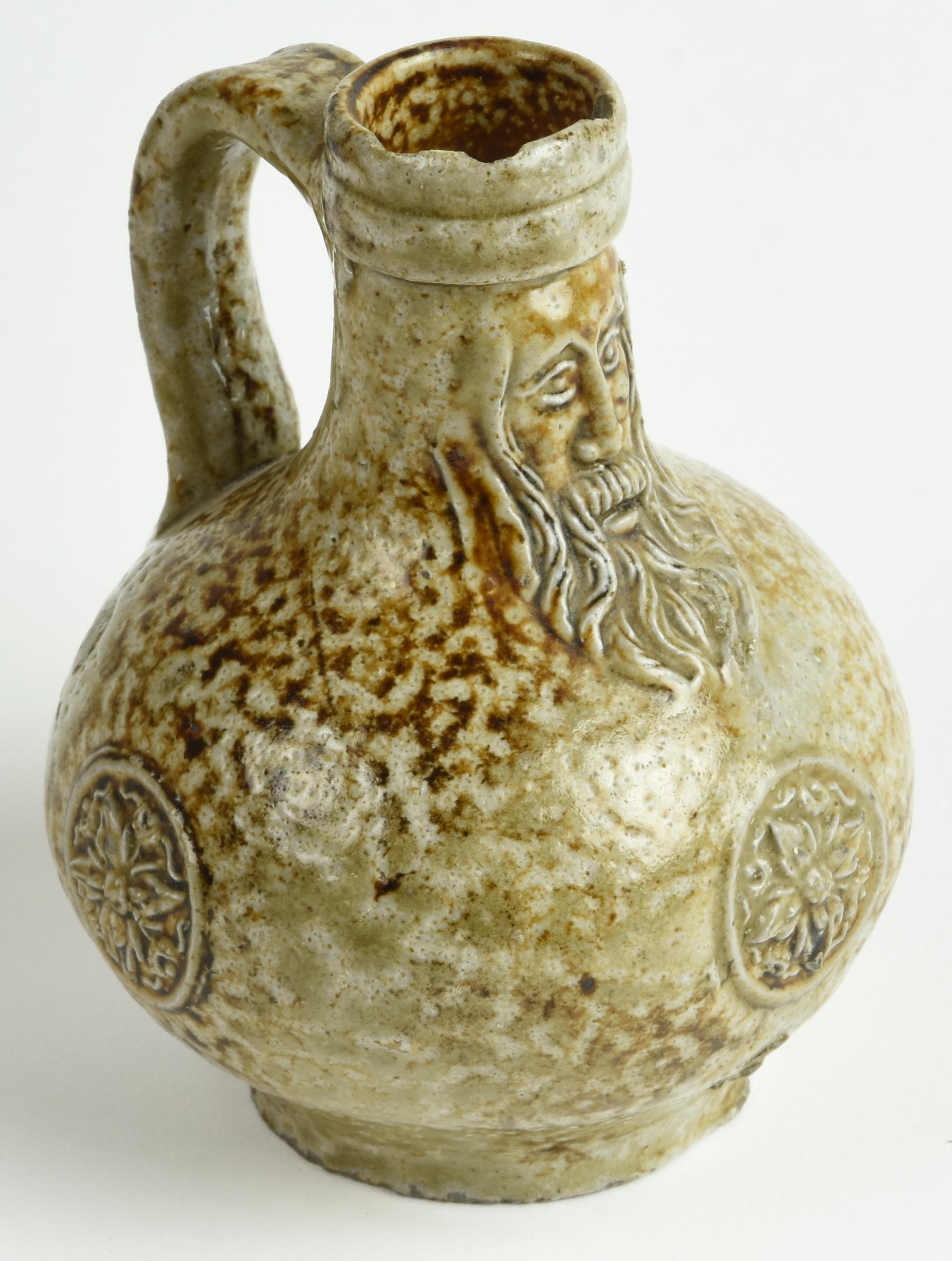
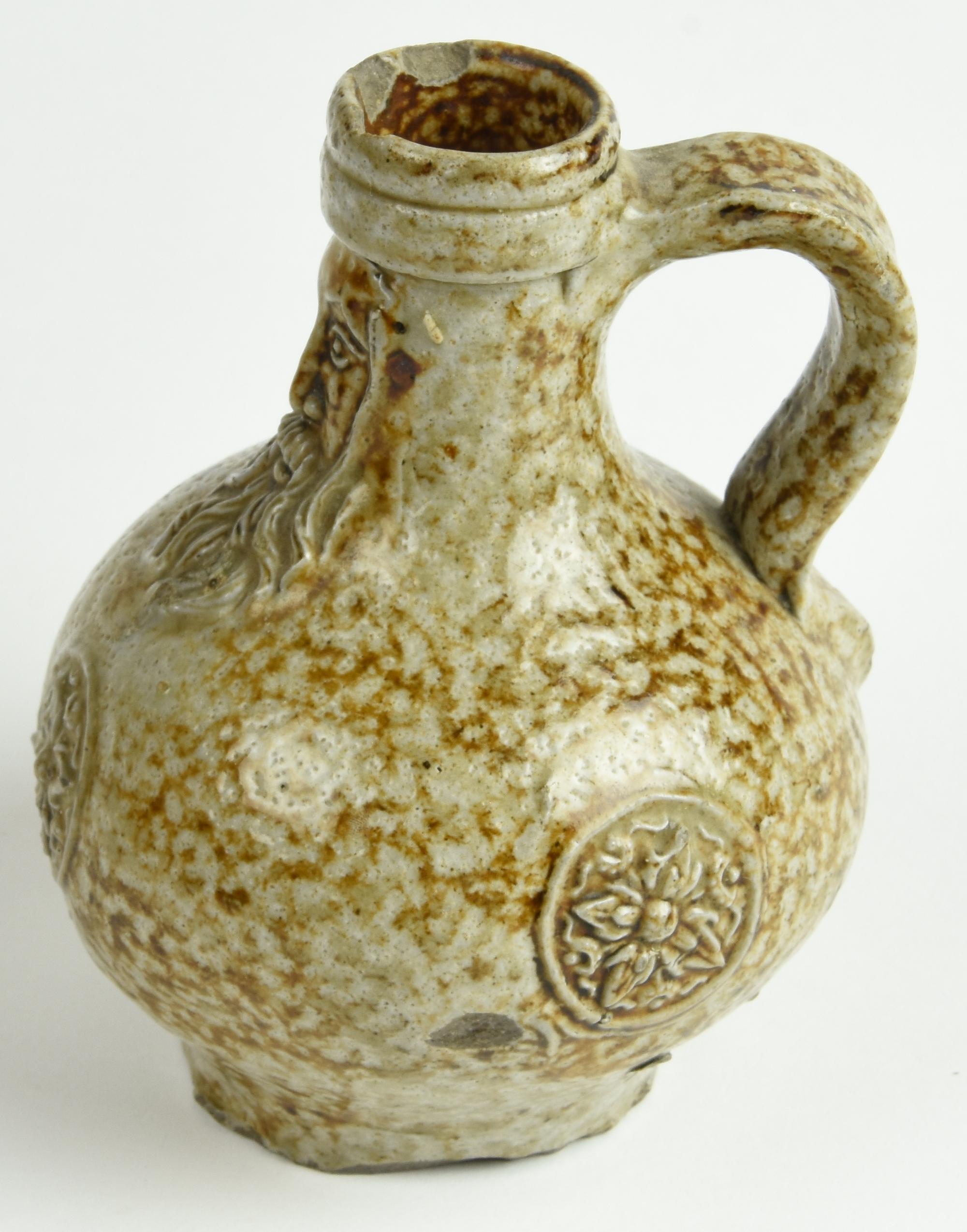
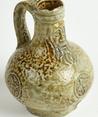
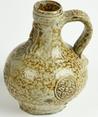
About this jug
Location:
Den Helder - Texel,
Netherlands
Long/Lat:
53.0426, 4.93952
Notes: Heavily damaged wreck with ballast blocks of lead from the late 16th or early 17th century. This wreck is known as 't Oude Wrak or Scheer I. The wreck has since been completely washed away. A half-metre thick layer of grain was found in the wreck, presumably wheat grains. In addition to a hold full of grain, the wreck also contained bales of straw and buckwheat husks, which were used as packaging material for fragile cargo. Most striking is the discovery of dozens of loaf-shaped lead bars with a total weight of 2,900 kg, on which dozens of stamps have been applied. The presence of the years 1590 and 1591 on various bars is noteworthy. The material in the inventory can mainly be dated to around 1600. Two large bronze cooking pots, a brass kettle of which only the handles have been preserved, and a brass skimmer were probably used to prepare meals. A red-baked earthenware bowl with green glaze was probably used to serve the food, and five pewter spoons were used to eat the meal. Two Frechen stoneware jugs for storing beer or oil and a small olive oil jug from Portugal, which may have been used as a canteen. An iron awl with a wooden handle was probably used to repair sails.
The grain found clearly indicates that this is the wreck of a grain ship that was loaded with grain in Prussia or the Baltic regions. The Portuguese jug suggests that the ship also sailed in Mediterranean waters. The type of ship is unknown, but it was clearly a seaworthy vessel.
Height: 118.00
Max-width: 95.00
Feature description: Bartmann jar (Frechen) with three floral medallions.
Identifier: 83-05-C02, PAN-00089307
Custody: Private collection