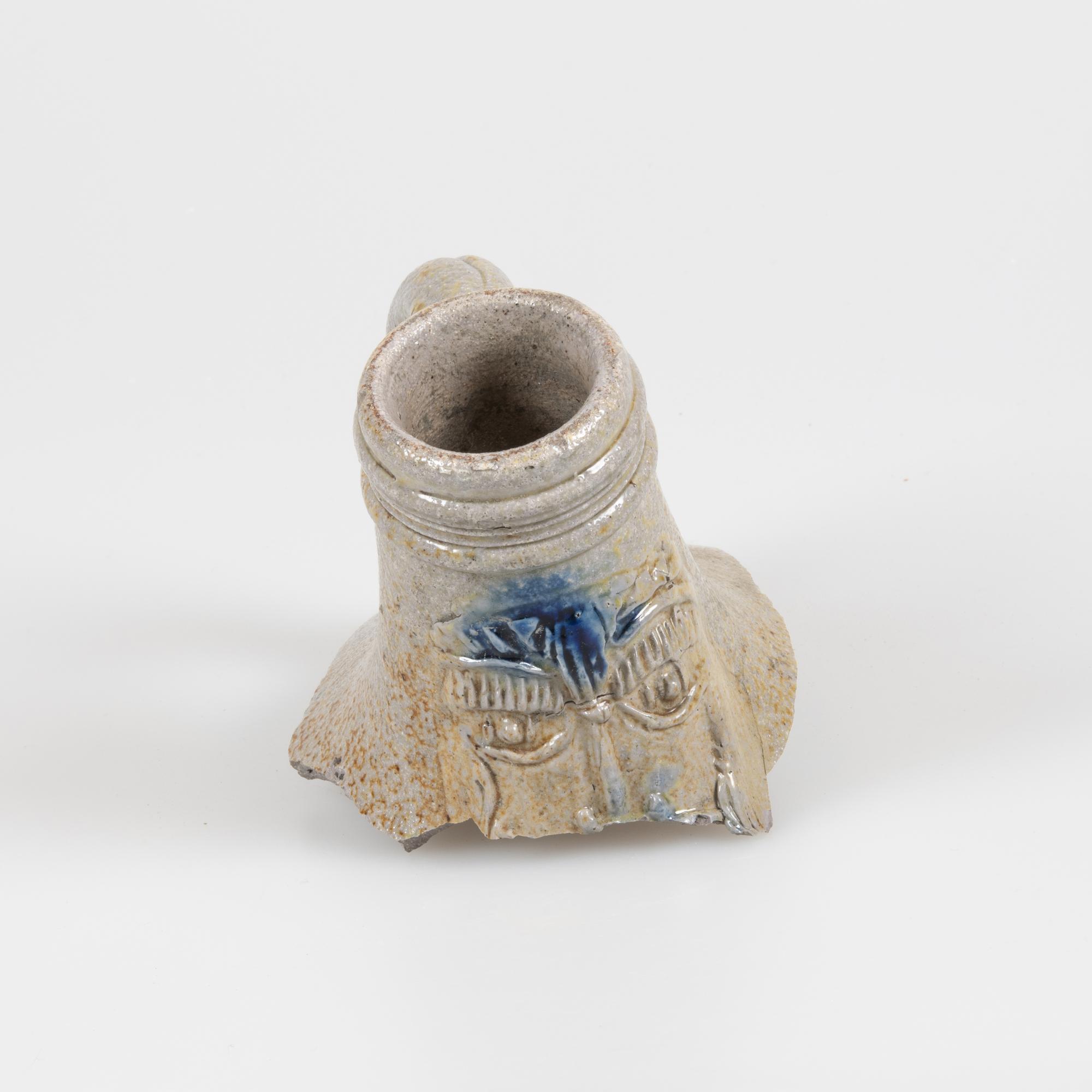
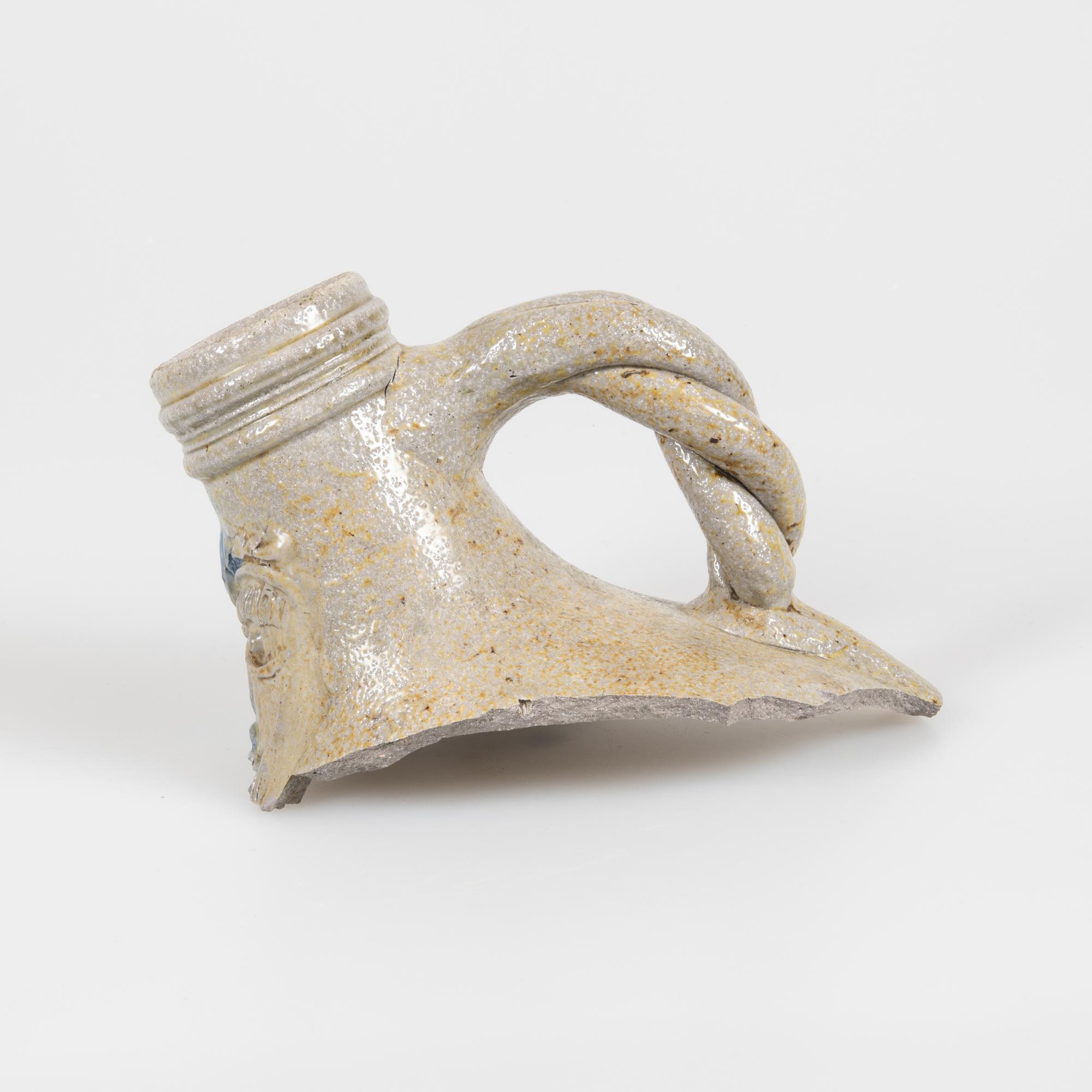
About this jug
Location:
Kuipersdijk, 1601 Enkhuizen,
Netherlands
Long/Lat:
52.700473344773, 5.2827201881886
Notes: In 2020, an excavation was carried out in Enkhuizen at the site of a filled-in seaport: the Oude Buyshaven. This port was dug at the end of the 16th century and filled in around the middle of the 19th century.
A thick layer of harbour silt containing waste from the 17th century was found against the quay revetment. This layer contained a striking amount of wood chips and fragments of hoops. The hoops are split branches of willow wood, which were used to hold the staves of barrels together. It was not until the 18th century that coopers also started using iron hoops for this purpose. The hoops show that we are dealing with wood waste from the coopers who had their workshops along the Kuipersdijk.
The harbour fill also contained a striking number of large pieces of stone, of various types of natural stone. These are ballast from ships, which was intended to increase the stability of a ship. The same applies to various large pieces of coral that were found. Much of the waste in the harbour fill is simply household waste from the city's inhabitants.
Height: 120.00
Max-width: 132.00
Feature description: Bartmann jug (edge fragment) with ribbed collar edge and twisted sausage handle. Made in Frechen.
Identifier: Collectie Archeologiemuseum Huis van Hilde PNH 11408-02 https://hdl.handle.net/21.12153/obj68770
Custody: Museum
Custody Data: Archeologiemuseum Huis van Hilde