About this jug
Location:
Kollegat, Buurtje 6, Oudeschild, Texel
Netherlands
Long/Lat:
53.03396, 4.84131
Notes: In 2006 and 2008, the Archaeological Working Group of the Texel Historical Society conducted an excavation on the grounds of Buurtje 6 in Oudeschild. In the 17th and 18th centuries, Buurtje in Oudeschild played an important role in supplying drinking water to ships passing through the Texel Roadstead. During that period, the Wezenput (Orphan Well) was located at Huize Brakenstein at the foot of the Hoge Berg, from which thousands of litres of long-lasting iron-rich water were pumped every day. At the end of the 18th century, a second well was dug next to it. In 1618, the Skilsloot was constructed, along which the Skillepaadje runs. Barges transported the water from the Wezenput across this ditch to the dike at Oudeschild, where the water barrels were lifted over the dike using a windlass. As a result of the high level of activity in this area, several inns and brothels were established here in the 17th and 18th centuries. This gave rise to names such as the Jeneverbuurtje (Jenever neighbourhood) and the “Kollegat” (gat = passage, kol = prostitute). In 1795, the Skilsloot was extended to the harbour of Oudeschild, so that the barrels no longer had to be pulled over the dike. The Jeneverbuurtje thus lost its function as an entertainment district and “red-light district” for sailors.
Height: 295.00
Max-width: 185.00
Foot diameter: 107.00
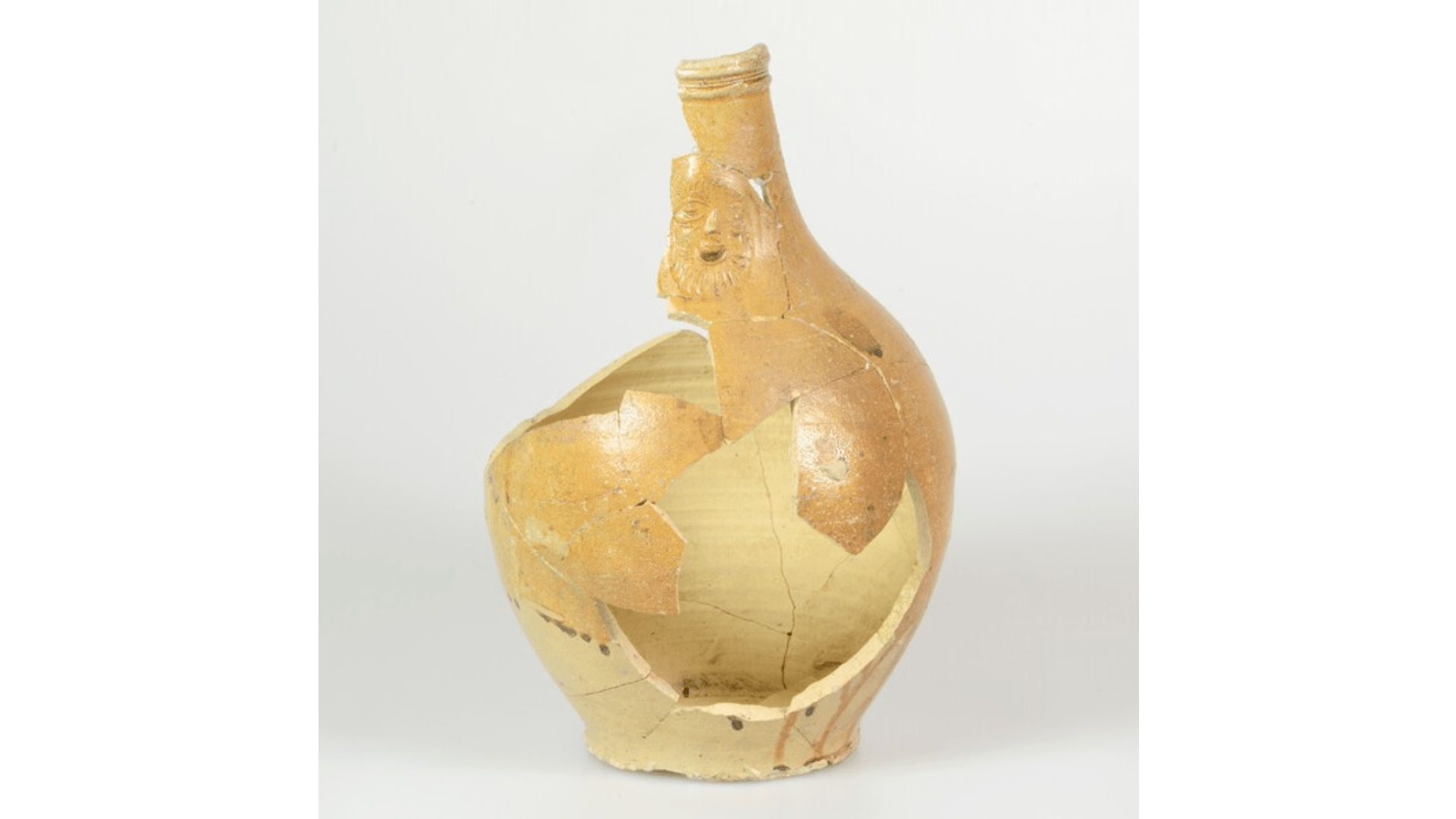
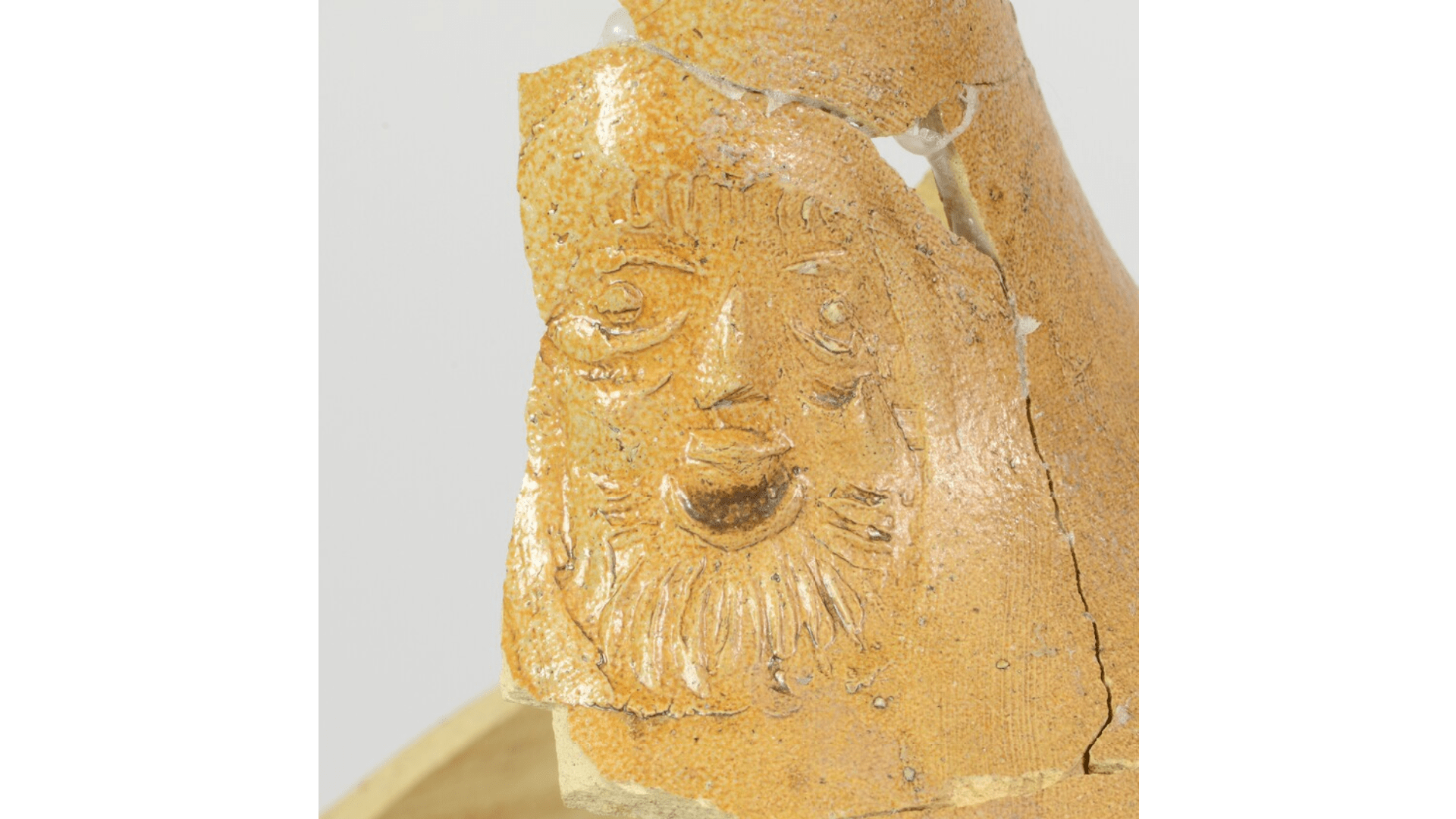
Feature description: Bartmann jug; s2-jug-32; convex jug with shoulder transitioning into a high neck with ribbed collar edge; stoneware with salt glaze, iron engobe; mask on neck; flat base; handle missing.
Identifier: Collectie Archeologiemuseum Huis van Hilde PNH 11056-01 https://hdl.handle.net/21.12153/obj65557
Custody: Museum
Custody Data: Archeologiemuseum Huis van Hilde