About this jug
Location:
Slot op den Hoef, Egmond aan den Hoef, Bergen
Netherlands
Long/Lat:
52.62162, 4.65474
Notes: In the fifteenth century, one of the largest castles in what is now the Netherlands stood on this site. At that time, the Egmond family was the most important noble family in Holland. The Lord of Egmond was the stadtholder (deputy) of the Count of Holland.
In 1573, William of Orange ordered the castle to be rendered uninhabitable, thereby preventing the Spanish from moving in. This marked the definitive end of the glorious castle; after a brief revival in which two towers were made suitable for habitation, the building was eventually sold to demolition contractors.
Height: 190.00
Max-width: 113.00
Foot diameter: 49.00
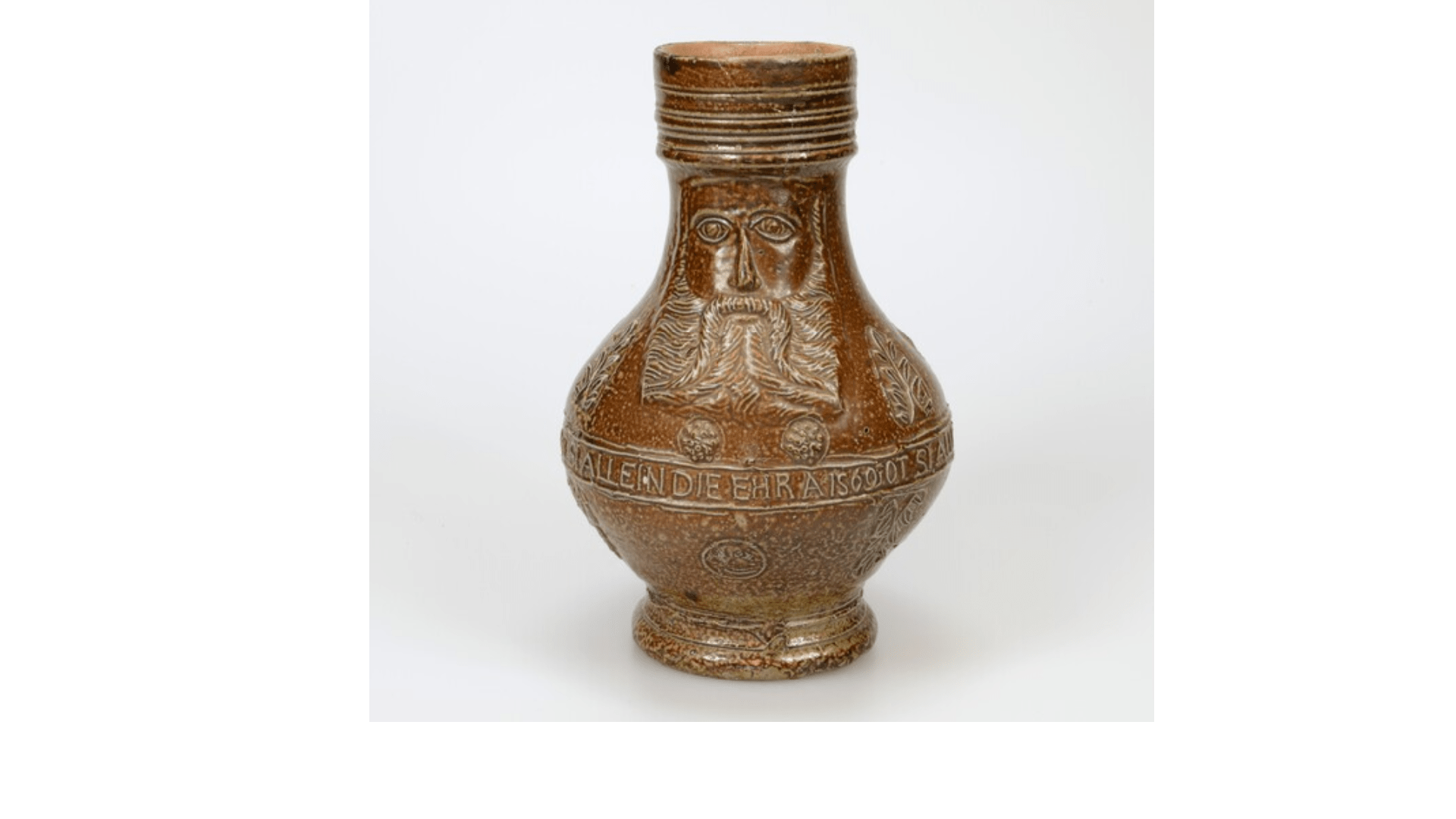
Transcription: GOT SI ALLEIN DIE EHR A 1569
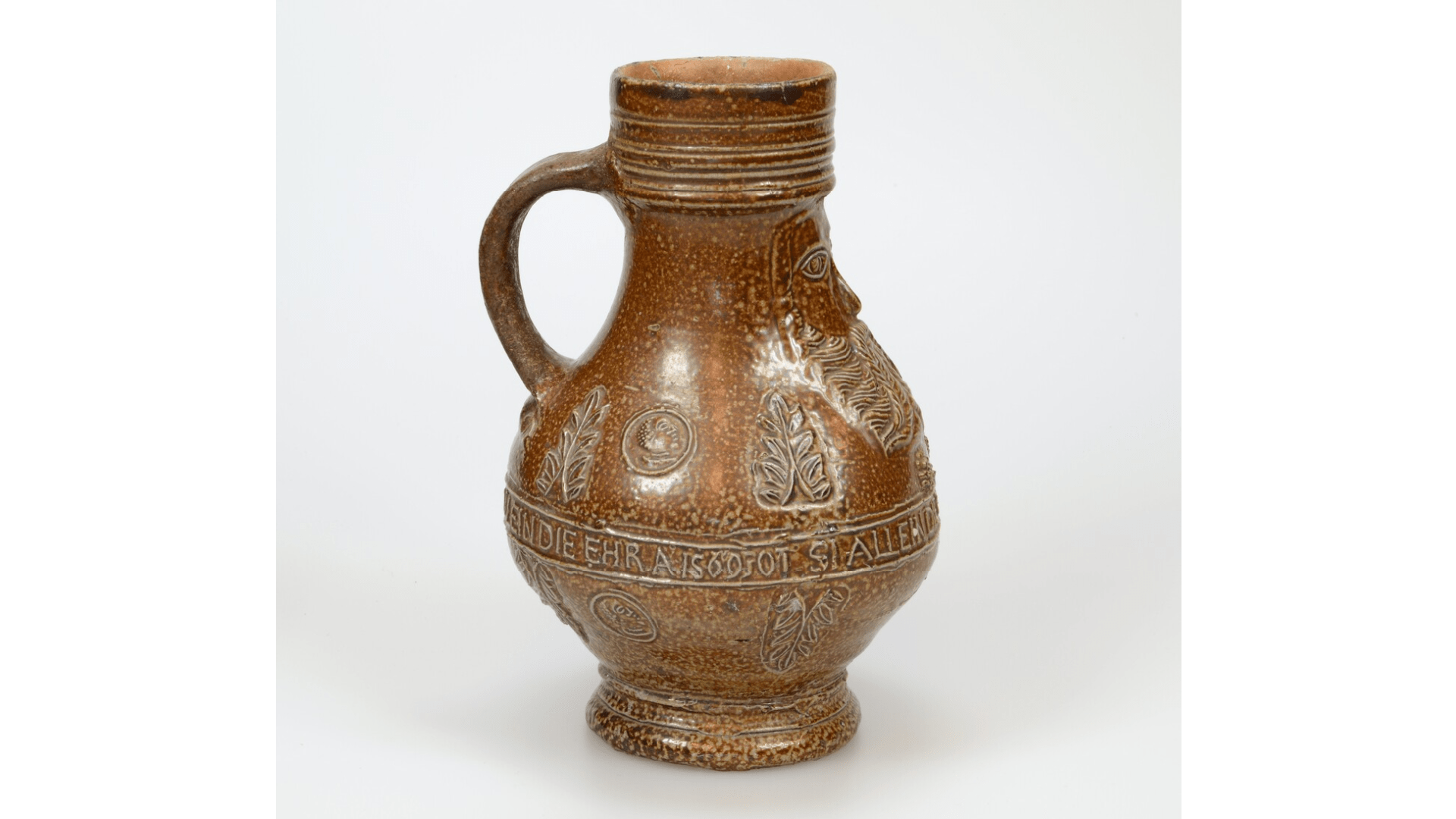
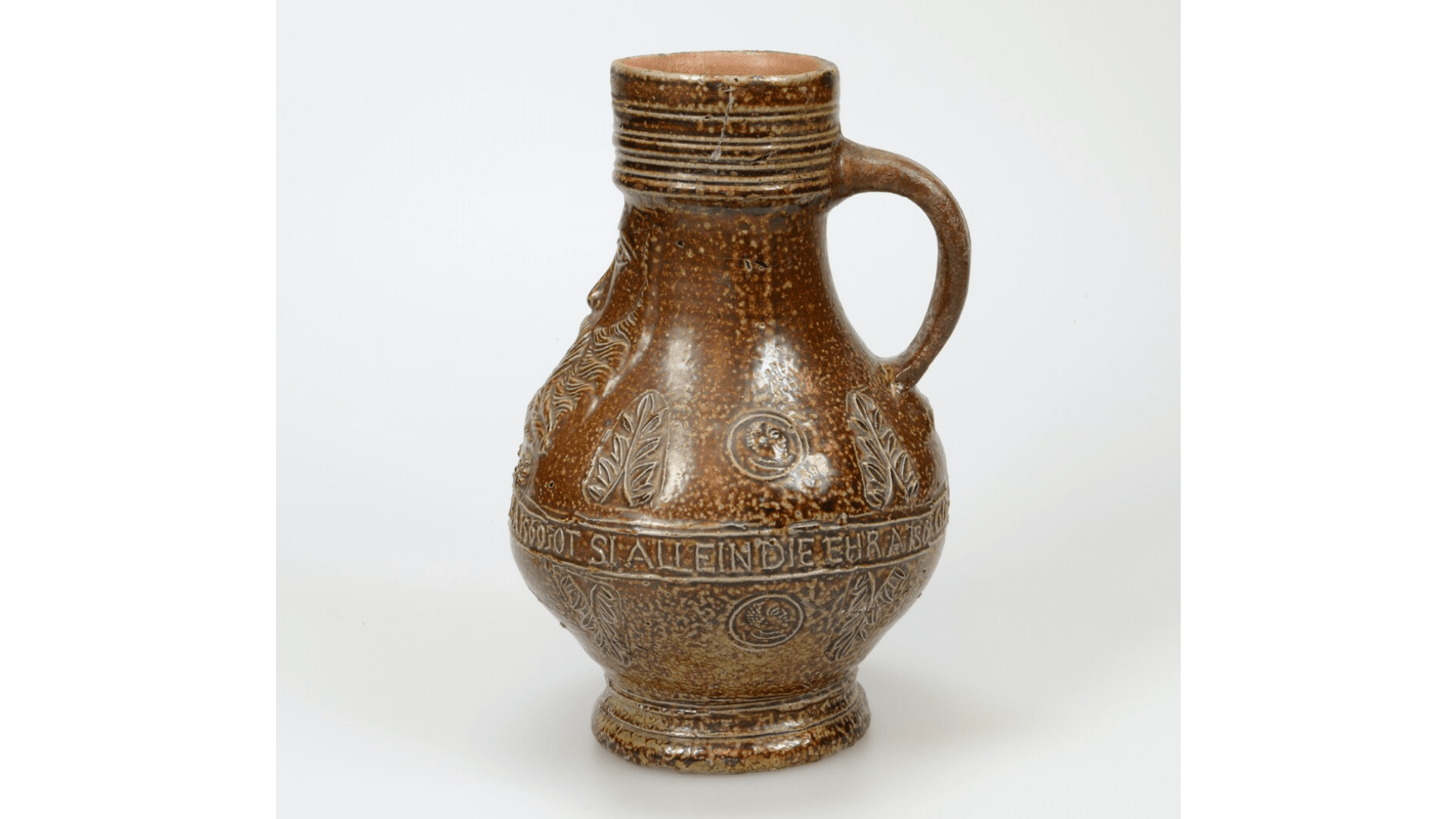
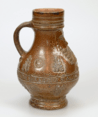
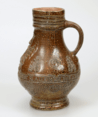
Feature description: Bartmann jug; s2-kan-58; convex jug with rounded belly, shoulder transitioning into a high neck with collar rim, ribbon handle, foot; stoneware with surface treatment: iron engobe, salt glaze; decoration with appliqués: mask on the neck with elaborate beard, extending over the belly; on the belly: horizontal text band with the text: GOT SI ALLEIN DIE EHR A 1569' free translation: only glory to God, anno 1569; the text band is edged on both sides with acanthus leaves and portrait medallions; origin: Frechen or Cologne, Rhineland
Identifier: Collectie Archeologiemuseum Huis van Hilde PNH 2922-02 https://hdl.handle.net/21.12153/obj38925
Custody: Museum
Custody Data: Archeologiemuseum Huis van Hilde